
If your yard turns into a sponge every time it rains, you're far from alone. Across Bloomington-Normal, Peoria, Champaign-Urbana and the surrounding area, soggy lawns, puddles that linger for days and water creeping toward the foundation are some of the most common landscape problems homeowners face.
The reason is right under your feet: Central Illinois clay. The good news is that most drainage problems can be fixed once you understand where the water is coming from and where it needs to go. This guide covers the most effective drainage solutions for clay soil, from simple weekend fixes to full drainage systems.
Why Clay Soil Causes Drainage Problems
Central Illinois sits on rich prairie soil that is fantastic for farming but challenging for lawns. Clay particles are tiny and pack together tightly, leaving little room for water to move through. When heavy rain hits, water soaks in slowly, so it pools on the surface or runs off toward the lowest point.
Several factors make it worse:
- Compaction: Foot traffic, mowing equipment and construction squeeze clay even tighter.
- New construction: Topsoil is often stripped and subsoil is compacted when homes are built.
- Freeze-thaw cycles: Frozen ground in late winter can't absorb snowmelt or early spring rain at all.
- Poor grading: Yards that are flat or slope toward the house trap water where you don't want it.
Start by Diagnosing the Problem
Before choosing a fix, take a walk around the yard during or right after a heavy rain. Note:
- Where water collects, and how long it stays
- Where downspouts empty
- Whether water flows toward or away from the foundation
- Where water enters the yard from neighboring properties or slopes
- Any areas of soil erosion, washed-out mulch or exposed roots
A few photos and notes go a long way when you sit down with a drainage contractor.
Drainage Solutions Compared
| Solution | Best For | Effort Level |
|---|---|---|
| Downspout Extensions | Water pooling near the foundation or along the house | Low |
| Core Aeration | Compacted lawns where water sits on the surface | Low |
| Regrading | Yards that slope toward the house or have low spots | Medium to High |
| French Drains | Persistent wet areas and subsurface water | Medium to High |
| Dry Creek Beds | Surface runoff channels that need a path and a nicer look | Medium |
1. Extend and Redirect Downspouts
This is the easiest and most overlooked fix. A single roof can shed a lot of water in a storm, and if a downspout empties right next to the foundation, that water saturates the soil exactly where you don't want it.
- Keep gutters clean so water reaches the downspouts
- Extend downspouts several feet away from the house
- Direct water toward a lawn area or landscape bed that can handle it
- Consider buried downspout lines that carry water farther away to a safe outlet
2. Core Aeration for Compacted Clay
When water sits on the lawn surface but the yard isn't a true low spot, compaction is often the cause. Core aeration pulls small plugs of soil out of the lawn, opening channels for water, air and nutrients to reach the root zone.
Aeration won't fix a grading problem, but it improves how quickly water soaks into clay and supports deeper roots that hold soil in place. In Central Illinois, fall is an ideal time; learn more in our fall aeration guide.
3. Regrade the Yard
Grading is the foundation of good drainage. The ground next to your home should slope away from the foundation so water moves out into the yard, not toward the basement.
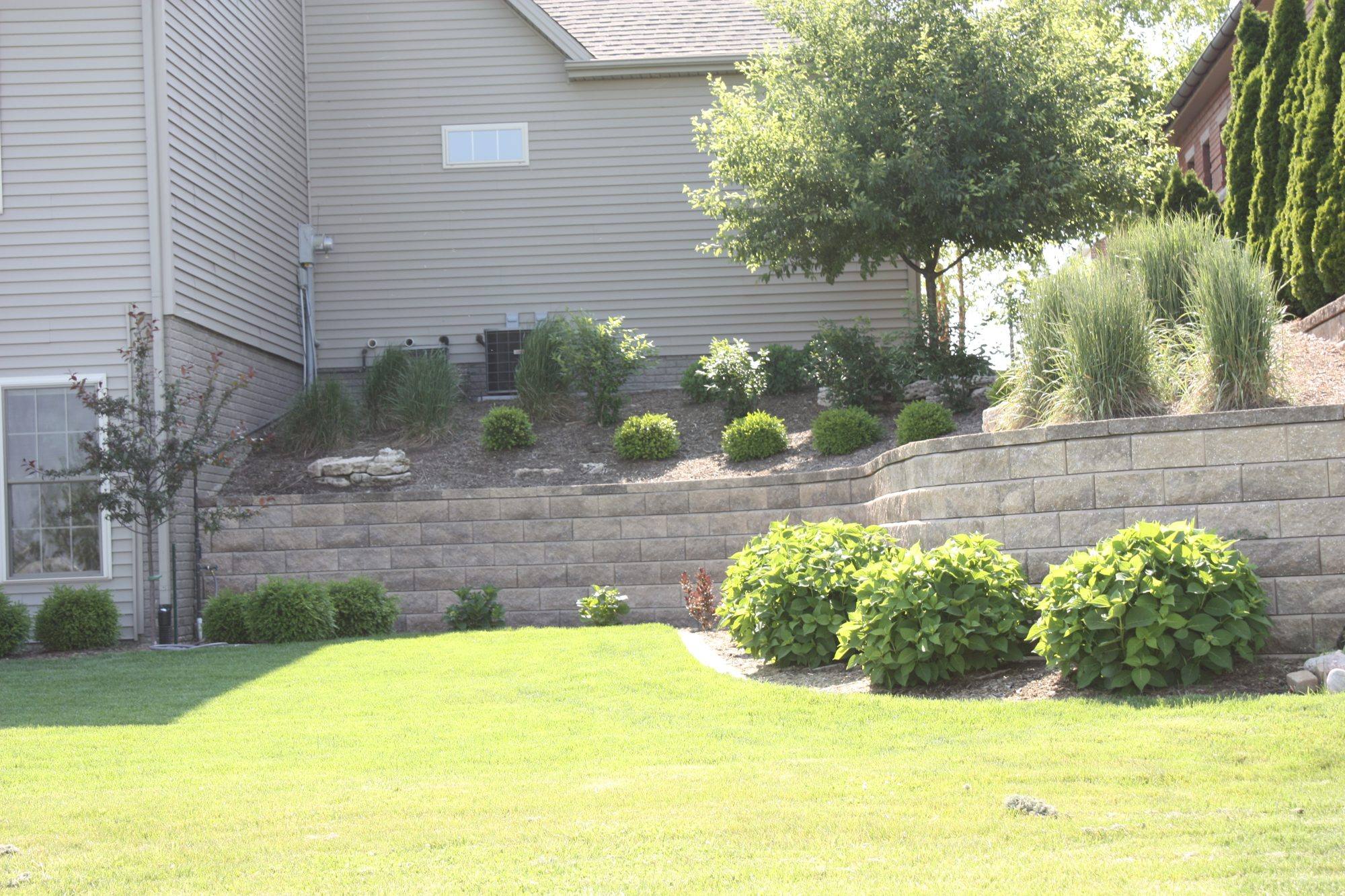
Regrading can range from adding and shaping topsoil along the foundation to reshaping larger sections of the yard to fill low spots and create a gentle path for water. Use quality soil, not just clay fill, and reseed or sod afterward so the new slope doesn't erode. On sloped lots, retaining walls can help create level areas and control runoff.
4. Install a French Drain
A French drain is a gravel-filled trench with a perforated pipe at the bottom. Water from saturated soil seeps into the trench, enters the pipe and flows to an outlet away from problem areas.
In clay soil, French drains need careful design:
- Proper slope: The pipe must fall continuously so water keeps moving.
- A real outlet: Water needs somewhere to go, such as a lower part of the property or an approved discharge point. Check your city's rules on where drainage water can be released.
- Fabric and clean stone: Landscape fabric around the gravel helps keep fine clay particles from clogging the system.
F&W's typical pricing for French drains is $10 to $65 per linear foot, depending on depth, materials and site conditions.
5. Build a Dry Creek Bed
A dry creek bed is a shallow, rock-lined channel that guides surface water across the yard. When it rains, water flows through the stones; the rest of the time, it looks like a natural landscape feature.
Dry creek beds work well where runoff already follows a path, such as between houses, along a slope or from a downspout to a lower area. River rock, boulders and native plantings along the edges make them both practical and attractive. If you like the look of rock and low-care plantings, our post on low-maintenance landscaping ideas has more inspiration.
Don't Forget About Irrigation
Sometimes a soggy yard is partly self-inflicted. Sprinkler systems that run too long or too often keep clay saturated, encourage disease and waste water. Adjusting run times and using cycle-and-soak scheduling can help. Our post on irrigation practices for clay soil covers this in detail.
What Drainage Projects Cost
Every yard is different, but most residential drainage projects with F&W fall between $1,000 and $8,000, depending on the size of the area and the solution. Simple downspout and aeration fixes are on the low end; regrading and French drain systems are on the higher end. We'll walk your yard and give you a free quote with options.
Frequently Asked Questions
Why does my yard hold water after it rains?
In Central Illinois, the most common reason is heavy clay soil, which absorbs water slowly. Low spots, flat or reversed grading, compacted soil and downspouts that empty right next to the house all make standing water worse.
What is the cheapest way to fix yard drainage?
Start with the simple fixes. Extending downspouts away from the house, clearing gutters, and core aerating compacted lawn areas cost little and often make a noticeable difference. Bigger problems may need regrading or a French drain.
Does a French drain work in clay soil?
Yes, when it is designed and installed correctly. In clay, a French drain works by collecting water in a gravel-filled trench with a perforated pipe and carrying it to a place where it can safely drain. Having a proper outlet with enough slope is critical.
How much does yard drainage cost?
F&W's typical pricing for French drains is $10 to $65 per linear foot, and most residential drainage projects fall between $1,000 and $8,000 depending on the size and type of solution. A free site visit is the best way to get an accurate number.
Can I send yard water toward my neighbor's property or the street?
Rules about where drainage water can go vary by community. Check your city's rules before redirecting water toward a neighbor, the street or a storm drain, and plan solutions that keep water on a safe, approved path.
Get a Free Quote
Tired of mud, puddles and a lawn you can't walk on after it rains? Request a Free Quote or call F&W Lawn Care & Landscaping at (309) 664-2666. We'll find where the water is coming from and recommend the right fix for your yard.
Rather have a pro handle it? F&W has provided erosion & drainage for Bloomington-Normal, Peoria, and Champaign-Urbana, Illinois properties since 1989. Call (309) 664-2666 or request a free quote.