
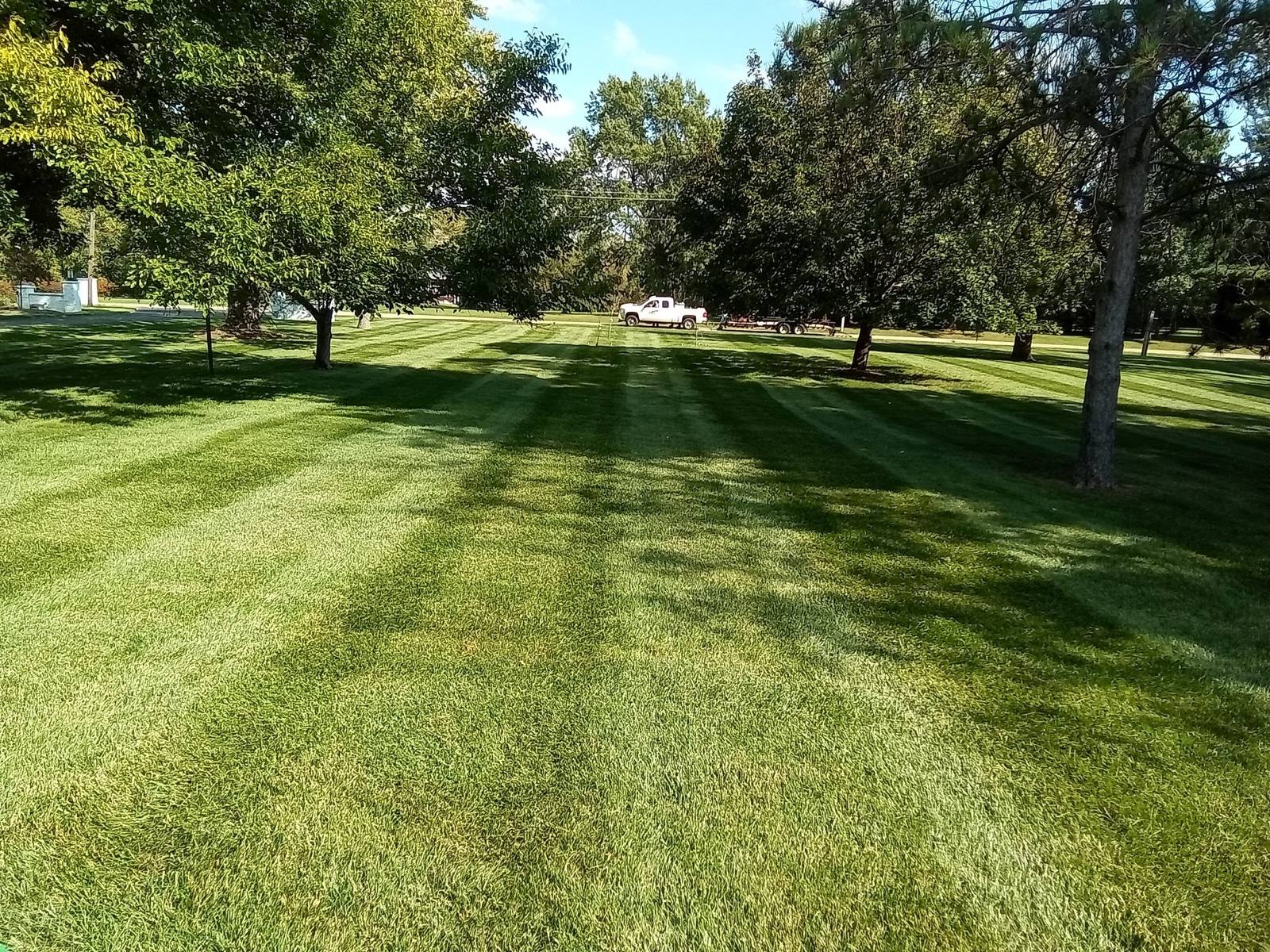
Central Illinois lawns face heavy clay soil and real seasonal stress. Fall aeration in Bloomington-Normal, IL gives grass roots room to grow again. Homeowners who skip this step often watch their lawns thin out year after year. This guide explains what aeration does and why fall works best for it.
Get a Free Quote
Why Fall Aeration Matters for Central Illinois Lawns
Bloomington-Normal sits on dense clay soil that compacts fast under foot traffic and mowing equipment. Compacted soil blocks water, air, and nutrients from reaching grass roots. Over time, that pressure shrinks root systems and weakens the whole lawn.
Fall aeration in Bloomington-Normal, IL loosens that soil before winter sets in. Grass plants use the cooler fall months to build stronger roots and store energy. A properly aerated lawn recovers faster from summer heat. It also handles the next season’s stress with more strength.
How Soil Compaction Builds Up in McLean County Yards
Regular mowing, kids playing outside, and pets running across the yard all press soil particles closer together. New construction sites often leave compacted subsoil beneath a thin layer of topsoil. Clay-heavy soil across Bloomington-Normal compacts more easily than sandy or loamy soil.
Once compaction sets in, roots struggle to push downward and spread out. Thatch buildup adds another layer of resistance between the soil and the surface. Homeowners often notice thinning patches, pooling water, or a hard feel underfoot. These signs point directly to a lawn that needs aeration this fall.
How Core Aeration Works
Core aeration uses a machine with hollow tines that pull small plugs of soil from the lawn. Each plug removes a section of grass, thatch, and dirt about two to three inches deep. The machine leaves these plugs on the surface, where they break down naturally over time.
Aerating the soil creates openings that help water infiltration, thatch removal, nutrient absorption, and air movement into the root zone. Removing soil this way relieves pressure instead of just poking holes with spikes. Spike tools push soil sideways and can add to compaction rather than fix it. Core aeration remains the most effective method for compacted Central Illinois lawns.
The Aeration Process Step by Step
A lawn care crew typically follows a consistent process for fall aeration in Bloomington-Normal IL:
- The crew inspects the lawn for compaction, thatch depth, and drainage issues.
- Technicians mark sprinkler heads, shallow utility lines, and landscape features first.
- The core aerator passes over the lawn in overlapping rows.
- Soil plugs stay on the surface and break down over two to three weeks.
- Crews often recommend overseeding or fertilizing right after aeration for faster recovery.
The Best Time for Fall Aeration in Bloomington-Normal, IL
Timing plays a major role in aeration results. By late summer and early fall, lawns often show more traffic wear, nutrient deficiencies, standing water, and bare spots. Cool-season grasses common in Illinois include Kentucky bluegrass, tall fescue, perennial ryegrass, and fine fescue. These grass types grow best during September and October.
Aerating during this window gives grass time to recover before winter dormancy. Waiting until late fall risks aerating a lawn that has already slowed its growth. Scheduling fall aeration in Bloomington-Normal, IL, early in the season gives roots the longest recovery window.
Signs Your Lawn Needs Aeration
Several warning signs tell homeowners it’s time to schedule aeration. Water pools on the surface after rain instead of soaking in. Grass feels thin, patchy, or spongy underfoot in high-traffic areas. A screwdriver won’t push easily into the soil past an inch or two.
Foot traffic from kids, pets, or outdoor gatherings packs down high-use areas fast. Lawns on newer construction lots often carry compacted subsoil from the building process. Any of these signs point toward a lawn that would benefit from aeration this fall.
Aeration and Overseeding: A Natural Pair
Aeration loosens compacted soil, and many homeowners pair it with overseeding to fill in thin or bare areas. The open soil left by core aeration gives grass seed better contact than thatch alone provides. This combination works well for lawns that took a beating over summer.
For a full walkthrough of timing, seed selection, and application rates, read our post on fall overseeding. Our overseeding services can also be scheduled directly alongside your aeration visit.
What to Expect After Aeration
Lawns look a little rough right after aeration, with small soil plugs across the surface. Those plugs break down naturally within two to three weeks with normal rainfall and mowing. Homeowners don’t need to rake up or remove the plugs themselves. Watering the lawn on a normal schedule speeds recovery.
Many homeowners add a fall fertilizer application after aeration to feed the newly exposed roots. Our fertilization and weed control services support the lawn through this recovery window.
Common Aeration Mistakes Homeowners Make
A few mistakes reduce the value of fall aeration in Bloomington-Normal, IL. Aerating dry, hard soil produces shallow plugs and limited benefit. Skipping overseeding after aeration wastes a real chance to thicken the lawn. Aerating too late in fall gives grass little time to recover before dormancy.
Using spike tools instead of core aeration adds compaction instead of relieving it. Avoiding these mistakes makes a real difference in how a lawn responds. For a broader look at fall prep, read our Fall Clean Up Checklist for Bloomington-Normal Homeowners or our guide on Fall Lawn Care in Bloomington-Normal.
Frequently Asked Questions
How Often Should You Aerate Your Lawn?
Most Central Illinois lawns benefit from aeration once a year, ideally in early fall. Lawns with heavy clay soil, new construction history, or frequent foot traffic may need it more. High-traffic yards with kids, pets, or regular gatherings often do well with aeration every fall.
Lawns with lighter soil and less traffic can sometimes go every other year instead. A local lawn care provider can assess your specific soil and traffic patterns.
When should I schedule fall aeration in Bloomington-Normal, IL?
Early to mid fall works best for Bloomington-Normal lawns, typically September through early October. Cool-season grass in this area recovers fastest when soil temperatures stay mild.
How much does fall aeration cost in Bloomington-Normal, IL?
Pricing depends on lawn size, soil condition, and whether you add overseeding or fertilization. F&W Lawn Care & Landscaping provides free quotes based on your specific McLean County property.
Does F&W Lawn Care offer fall aeration outside Bloomington-Normal?
Yes. We provide fall aeration across Bloomington-Normal, Peoria, and Champaign-Urbana, along with the surrounding Central Illinois communities.
Can I aerate and overseed my lawn on the same day?
Yes. Most Bloomington-Normal lawns benefit from overseeding right after aeration, since the open soil helps new seed take root faster.
How long does fall aeration take for an average Bloomington-Normal yard?
Most residential lawns in this area take one to two hours, depending on size, layout, and obstacles like flower beds or irrigation heads.
Do I need to do anything before my aeration appointment?
Mow the lawn a day or two before the crew arrives and mark any sprinkler heads or shallow lines you know about. Our technicians also check for these during the visit.
Schedule Fall Aeration in Bloomington-Normal IL
A properly timed aeration sets a lawn up for a stronger, thicker spring. F&W Lawn Care & Landscaping has served Bloomington-Normal, Peoria, and Champaign-Urbana since 1989. Our crews understand the clay-heavy soil and seasonal patterns unique to Central Illinois lawns. Contact us today to schedule your fall aeration service and give your lawn a strong start before winter arrives.
Get a Free Quote
Rather have a pro handle it? F&W has provided lawn aeration for Bloomington-Normal, Peoria, and Champaign-Urbana, Illinois properties since 1989. Call (309) 664-2666 or request a free quote.