
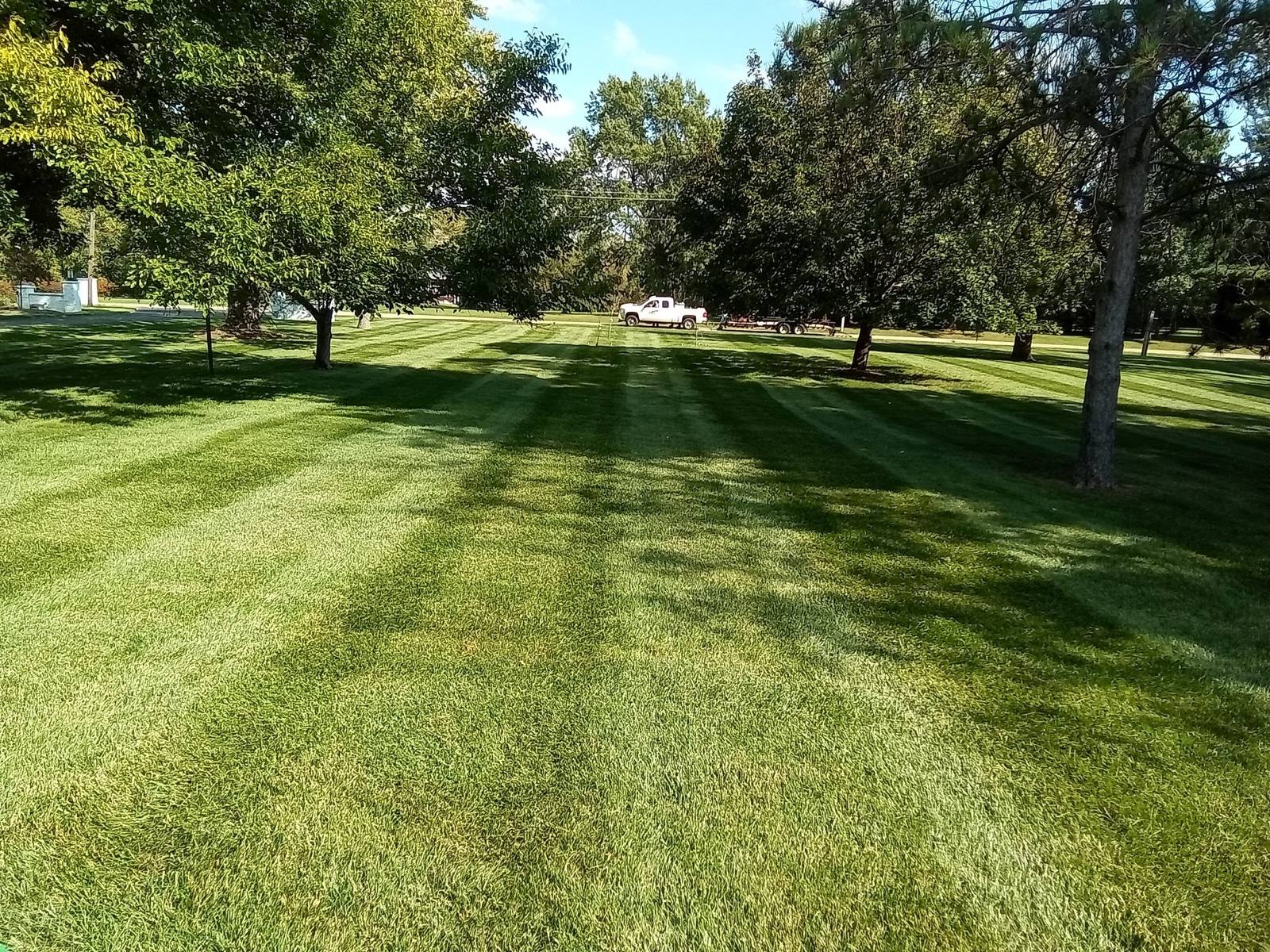
Walk into any garden center in the fall and you'll find a wall of grass seed bags, each promising the thickest, greenest lawn on the block. For Central Illinois homeowners, the right choice comes down to a few practical questions: How much sun does your yard get? How much foot traffic? And how much watering and care are you willing to give it?
This guide breaks down the grass types that perform well in our region, how to match seed to your yard's conditions, and when to plant so new grass has the best chance to take hold.
Why Cool-Season Grasses Win in Central Illinois
Central Illinois sits in a climate with cold winters, hot and sometimes dry summers, and long, mild stretches in spring and fall. Cool-season grasses are built for exactly that. They grow most actively in the cooler months, slow down in summer heat, and survive our freeze-thaw winters.
Warm-season grasses like Bermuda grass and zoysia are common farther south, but they stay brown for much of the year here and don't fit most Central Illinois lawns. For nearly every home in Bloomington-Normal, Peoria and Champaign-Urbana, the answer is a cool-season grass or blend.
Our heavy prairie clay soils also play a role. Clay holds nutrients well but compacts easily and can drain slowly. Grasses with deeper roots and good wear tolerance tend to handle those conditions best.
The Main Grass Types Compared
| Grass Type | Strengths | Weaknesses | Best For |
|---|---|---|---|
| Tall Fescue | Deep roots, good drought and heat tolerance, handles wear and clay well | Bunch-type growth, so it does not spread to fill bare spots on its own | Sunny to partly shaded yards, play areas, lower-input lawns |
| Kentucky Bluegrass | Rich color, soft texture, spreads by rhizomes to repair itself | Slower to establish, wants more water and fertilizer, weaker in shade | Full-sun lawns where homeowners want a dense, manicured look |
| Perennial Ryegrass | Germinates quickly, fine texture, good wear tolerance | Less cold- and drought-hardy on its own, does not spread | Blending with bluegrass for faster cover and quick repairs |
| Fine Fescues | Better shade tolerance, low fertilizer needs | Does not handle heavy traffic or wet, poorly drained soil well | Shady areas under trees with light foot traffic |
Tall Fescue
Tall fescue has become a go-to for many Central Illinois lawns. Today's turf-type tall fescues have a finer blade than older varieties, and their deep roots help them stay greener through dry spells. They hold up well to kids, pets and clay soil. The main trade-off is that tall fescue grows in bunches, so bare spots need to be reseeded rather than filled in on their own.
Kentucky Bluegrass
Kentucky bluegrass is the classic Midwestern lawn. It spreads by underground rhizomes, which lets it knit together into a thick carpet and recover from damage. It does best in full sun with steady watering and a regular fertilization program. Bluegrass is slower to germinate, so it is often blended with faster-growing grasses.
Perennial Ryegrass
Perennial ryegrass sprouts fast, which makes it a helpful partner in seed blends. It gives quick cover while slower bluegrass fills in. On its own, it is less hardy through harsh winters and dry summers, so it usually works best as part of a mix rather than a stand-alone lawn.
Matching Seed to Sun and Shade
Before you buy seed, spend a day watching how sunlight moves across your yard. Most lawns have more than one zone.
- Full sun (six or more hours of direct sun): Kentucky bluegrass and ryegrass blends, or tall fescue blends with some bluegrass, all perform well.
- Partial shade (about four to six hours): Tall fescue or a mix with fine fescues usually holds up better than straight bluegrass.
- Heavy shade (less than four hours): Fine fescue mixes labeled for shade are the best bet, but grass may still struggle. Thinning tree canopies with tree care or switching to mulched beds can be a better long-term answer.
It is perfectly fine to use different seed in different parts of the yard. A shade mix under the maple and a sun blend in the open front lawn often looks more uniform over time than one seed forced to work everywhere.
What to Look for on the Seed Label
Not all bags are equal, even when the front says the same thing. Flip the bag over and read the label.
- Named varieties: Quality seed lists specific cultivars, not just "tall fescue."
- Weed seed and other crop content: Lower is better. You don't want to plant problems.
- Germination rate: Higher numbers mean more seeds should sprout.
- Test date: Fresher seed is more reliable.
- Filler and coatings: Some products include mulch or coatings, which means less actual seed by weight.
The Best Time to Seed: Fall
In Central Illinois, the best window for seeding cool-season grass runs from early to mid-September into early October. Here's why fall beats spring:
- Soil is still warm from summer, which helps seed germinate quickly.
- Cooler air temperatures are easier on young grass.
- Fall rains and morning dew help keep the seedbed moist.
- Many summer weeds, including crabgrass, are winding down instead of competing.
- New grass gets two cool growing seasons, fall and the following spring, before facing summer heat.
Spring seeding can work for small repairs, but young grass then has to survive its first summer with shallow roots. It also conflicts with crabgrass pre-emergent, which can stop new grass seed from sprouting. For more on timing, see our guide to fall overseeding.
How to Give New Seed Its Best Chance
- Mow a little shorter than usual before seeding so seed can reach the soil.
- Core aerate. Aeration opens up compacted clay and creates pockets where seed settles and roots easily. Read more in our fall aeration guide.
- Spread seed evenly using a spreader, following the rate on the seed label.
- Keep the surface moist. Light, frequent watering until seedlings are established, then gradually water deeper and less often.
- Hold off on weed control on newly seeded areas until the new grass has been mowed a few times. Always follow the product label.
- Mow when ready. Once new grass reaches normal mowing height, mow with a sharp blade.
What Overseeding Costs
F&W's typical price for overseeding a quarter-acre lawn is $150 to $400, depending on lawn condition and seed choice. Bundling overseeding with aeration costs less than booking the two services separately, and it usually gives better results. We'll recommend a seed blend that fits your yard's sun, shade and use, and give you a free quote.
Frequently Asked Questions
What is the best grass seed for Central Illinois?
Most Central Illinois lawns do best with cool-season grasses. Tall fescue is a tough, drought-tolerant choice for sunny yards and heavy clay. Kentucky bluegrass gives a dense, soft lawn that spreads to fill gaps. Blends that mix bluegrass with perennial ryegrass, or tall fescue with a little bluegrass, combine those strengths.
When should I plant grass seed in Central Illinois?
Fall is the best time. The ideal window runs from early to mid-September into early October, when the soil is still warm but the air is cooling. Seed planted then has time to root before winter and faces less weed competition than spring seeding.
What grass seed grows best in shade?
No turfgrass thrives in deep shade, but fine fescues and some tall fescue varieties handle partial shade better than Kentucky bluegrass. Look for a seed mix labeled for shade, and consider thinning tree canopies or using mulch beds where grass struggles.
Should I aerate before overseeding?
Yes, in most Central Illinois lawns. Core aeration loosens compacted clay and creates openings where seed can reach the soil. Bundling aeration with overseeding usually costs less than booking the two separately.
How much does overseeding cost?
F&W's typical range for overseeding a quarter-acre lawn is $150 to $400, and bundling it with aeration costs less than booking separately. Contact F&W for a free quote based on your lawn.
Get a Free Quote
The fall seeding window is short. Request a Free Quote or call F&W Lawn Care & Landscaping at (309) 664-2666, and we'll help you choose the right seed and get it in the ground on time.
Rather have a pro handle it? F&W has provided lawn overseeding for Bloomington-Normal, Peoria, and Champaign-Urbana, Illinois properties since 1989. Call (309) 664-2666 or request a free quote.