
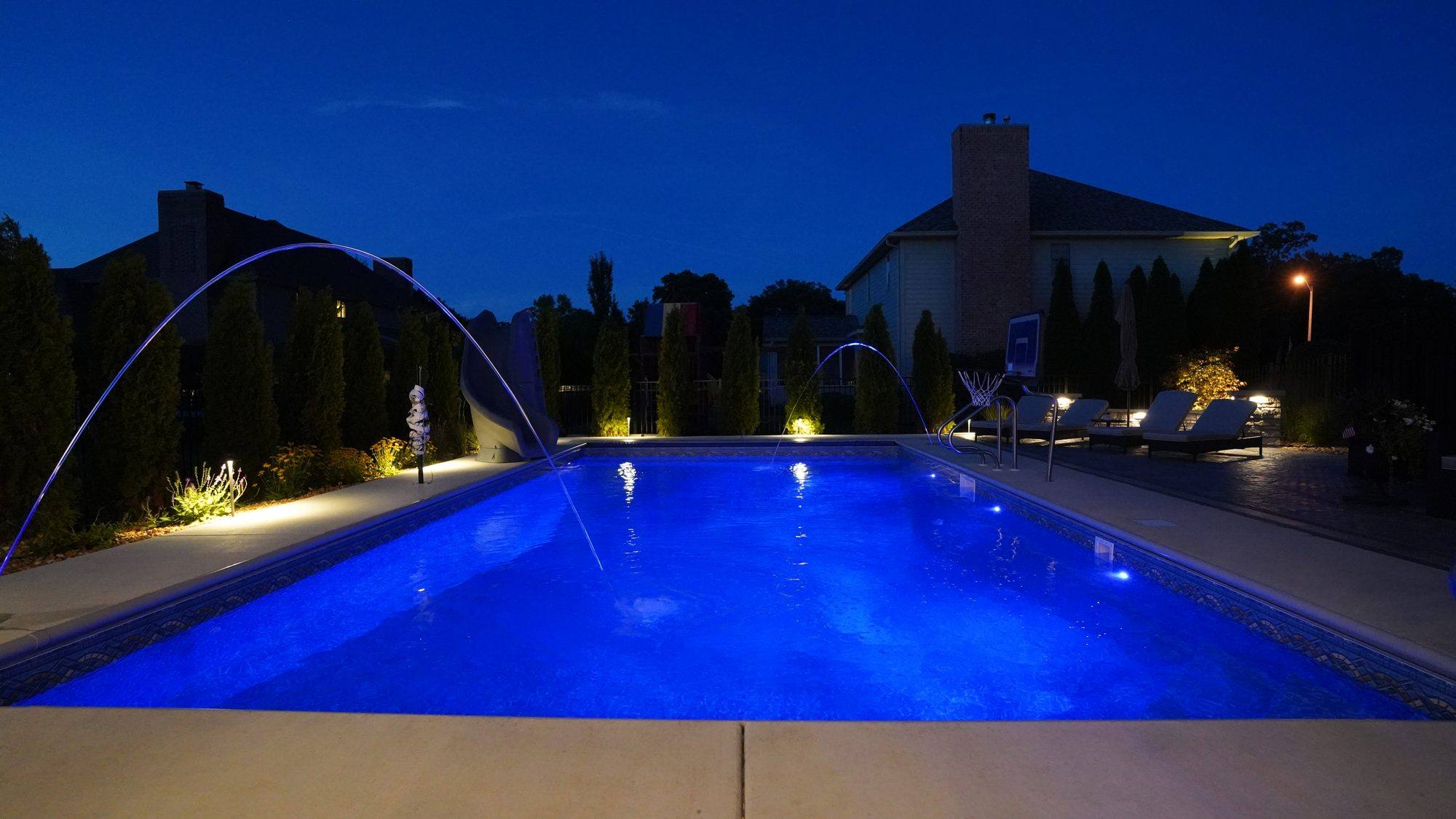
Central Illinois homes spend a lot of the year in the dark. In late fall and winter, the sun can set before many people get home from work, and even in summer, evenings on the patio stretch well past dusk. Thoughtful landscape lighting lets you enjoy your yard after sunset, makes walking around your property safer and shows off the landscaping you've invested in.
Here are practical lighting ideas for Bloomington-Normal, Peoria, Champaign-Urbana and surrounding homes, plus what to know about fixtures, controls and cost.
Start With a Plan
Great lighting is about placement, not just the number of fixtures. Before choosing lights, walk around your property at night and ask:
- Where do people walk after dark? Driveways, front walks, side yards and steps.
- Where do you spend time outdoors in the evening? Patios, decks, pools and fire pits.
- What features deserve attention? Trees, the front of the house, planting beds and walls.
- Where are the dark corners you'd like to brighten for safety?
The goal is balance. A few well-placed lights usually look better than flooding the yard with brightness.
1. Path and Walkway Lighting
Path lights are the most common place to start, and for good reason. They guide guests to your door and help everyone avoid trips on uneven ground.
- Stagger fixtures on alternating sides of the path rather than lining them up like a runway.
- Space them so pools of light overlap slightly without being too bright.
- Choose fixtures that cast light downward to reduce glare.
- Set them back from the edge of walks so they are out of the way of shovels and snowblowers.
2. Uplighting Trees and Architecture
Uplighting places fixtures at ground level aimed upward. It creates drama and depth, turning a mature oak, a row of evergreens or the front of your home into a nighttime focal point.
- Trees: Light from one or two angles to show off the trunk and canopy. Deciduous trees look different in winter, and bare branches can be striking when lit.
- Home exterior: Wash light across columns, stone or brick to add texture.
- Evergreens and ornamentals: Small accent lights highlight specimen plants in beds.
If you have mature trees, keeping them healthy with regular tree care makes uplighting even more rewarding.
3. Patio, Deck and Step Lighting
Outdoor living spaces are where lighting really pays off. Soft, functional lighting turns a patio into an evening room.
- Step lights: Recessed into stair risers or walls so every step is visible.
- Wall and seat lights: Built into seat walls and retaining walls for a clean, low-glare glow.
- Downlighting: Fixtures mounted in trees or on pergolas cast a natural, moonlight effect onto the space below.
- Accent lights: Highlight a fire pit area, outdoor kitchen or water feature.
Planning a new outdoor space? Lighting is easiest to add while patios and hardscapes are being built, when wiring can be run under pavers and through walls.
4. Security Lighting
Good landscape lighting also makes your home feel safer. Light entrances, garage doors, side yards and dark corners where someone could go unnoticed. Low-voltage lighting can complement brighter motion-activated fixtures near doors so the yard is welcoming but still well-lit where it counts.
Avoid aiming bright lights toward the street or neighboring homes. Glare can actually make it harder to see, and it can bother neighbors. Some communities have rules about outdoor lighting, so check your city's rules if you're unsure.
Lighting Types at a Glance
| Lighting Type | Where It Works | What It Does |
|---|---|---|
| Path Lights | Walkways, driveways, garden paths | Guides movement and improves safety |
| Uplights | Trees, home facade, walls | Adds drama and depth |
| Step and Wall Lights | Stairs, seat walls, retaining walls | Reduces trip hazards with low glare |
| Downlights | Trees, pergolas, eaves | Creates soft, natural light over patios |
| Accent Lights | Planting beds, water features | Highlights focal points |
Why Low-Voltage LED Is the Standard
Most residential landscape lighting today uses low-voltage LED fixtures. A transformer steps household power down to a lower voltage that runs the lights. The benefits include:
- Energy efficiency: LEDs use far less power than older halogen bulbs.
- Long life: Fewer bulb changes and less maintenance.
- Flexibility: Fixtures can be added or moved as your landscape grows.
- Safer to work around: Lower voltage is easier to install and maintain in landscape beds.
- Color options: Warm white tones generally look most natural on homes and plants.
Timers, Photocells and Smart Controls
Lights you have to remember to turn on rarely get used. Most systems include a transformer with a timer, a photocell that turns lights on at dusk, or both. A common setup turns lights on at dusk and off late at night, with some security lights staying on longer. App-based controls are also available for homeowners who want to adjust schedules from a phone.
Built for Central Illinois Weather
Our winters bring snow, ice and freeze-thaw cycles, so durability matters.
- Choose fixtures made from durable materials rated for outdoor use.
- Bury wiring at a proper depth and keep it out of areas likely to be dug or aerated.
- Keep fixtures away from areas where snow gets piled or plowed.
- Each spring, clean lenses, straighten fixtures and trim plants that have grown over lights.
What Landscape Lighting Costs
F&W's typical landscape lighting pricing is $100 to $300 per fixture installed, and full systems commonly range from $2,000 to $6,000, depending on the number of fixtures, wiring runs and property size. Many homeowners start with a front walk and entry, then add patio and tree lighting later. We'll design a plan that fits your home and give you a free quote. Explore more of our landscaping services to see how lighting fits into a complete outdoor design.
Frequently Asked Questions
What is the best type of landscape lighting for a home?
For most homes, low-voltage LED landscape lighting is the best choice. It is energy-efficient, long-lasting and safer to work around than line-voltage systems, and it comes in fixtures for paths, uplighting, patios, steps and more.
How much does landscape lighting cost?
F&W's typical pricing is $100 to $300 per fixture installed, and full systems commonly range from $2,000 to $6,000 depending on the number of fixtures and the size of the property. Contact F&W for a free quote.
Does landscape lighting hold up in Central Illinois winters?
Quality fixtures designed for outdoor use handle cold, snow and freeze-thaw cycles well. Choose durable materials, keep fixtures clear of snow piles and plow paths, and check connections each spring.
Can landscape lighting run on a timer?
Yes. Most low-voltage systems use a transformer with a timer, photocell or both, so lights turn on at dusk and off at a set time. Some systems also offer app-based control.
Does landscape lighting help with security?
Lighting entrances, walkways, dark corners and the edges of the property makes it easier to see who is approaching and removes hiding places. It works best as part of a broader home security plan.
Get a Free Quote
Ready to enjoy your yard after dark? Request a Free Quote or call F&W Lawn Care & Landscaping at (309) 664-2666. We'll help you light paths, patios and favorite features with a system built for Central Illinois.
Rather have a pro handle it? F&W has provided landscape lighting for Bloomington-Normal, Peoria, and Champaign-Urbana, Illinois properties since 1989. Call (309) 664-2666 or request a free quote.